

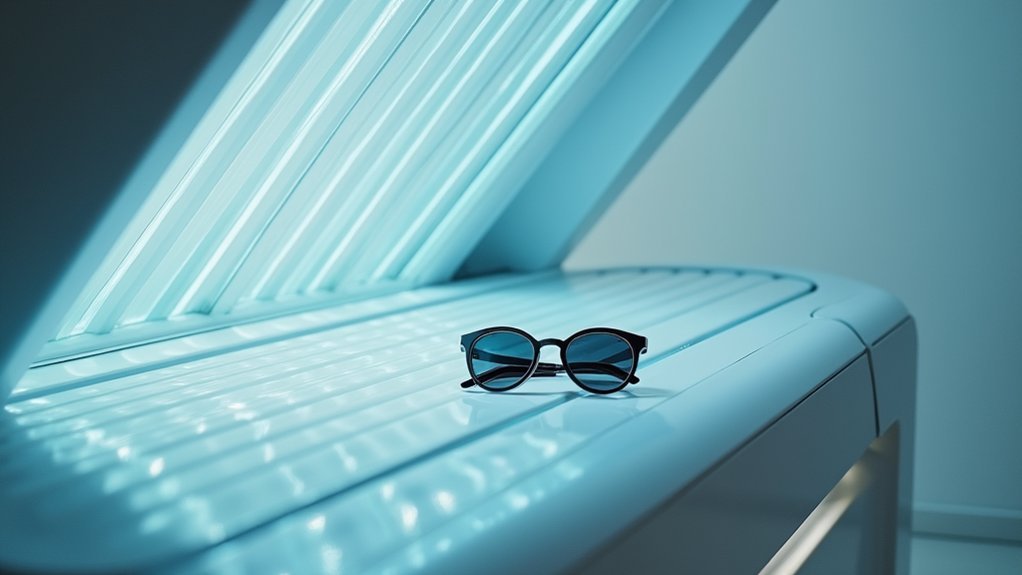
Have you been wondering, “can tanning beds cause skin cancer?” Yes, tanning beds can significantly increase your risk of skin cancer due to the harmful UV radiation they emit. These beds primarily produce UVA rays, which penetrate deeply into your skin and can cause DNA damage. This damage can lead to mutations, accelerating skin aging and heightening your risk of various skin cancers, especially melanoma. It’s crucial to understand these risks and explore safer alternatives for achieving a tan.
There’s more to discover about safe tanning options and expert advice.
Understanding Tanning Beds and Their Mechanism

When you step into a tanning bed, you’re exposing your skin to ultraviolet (UV) radiation, which primarily comes from the tanning lamps inside.
Tanning beds mainly emit UVA rays, which penetrate deeply into your skin and can lead to DNA damage in the skin cells. This damage increases your risk of developing skin cancer, including melanoma and non-melanoma types.
Indoor tanning might seem appealing for a quick tan, but the harmful effects accumulate over time.
Understanding how tanning beds work and the associated risks is crucial for protecting your skin and lowering your chances of serious health issues later on.
The Science Behind UV Radiation and Skin Damage
Exposure to UV radiation from tanning beds can significantly damage your skin, leading to serious health risks. Understanding how this happens can help you make informed choices.
Here are some key points about skin damage:
- DNA Damage: UV radiation alters DNA in your skin cells.
- Tanning Response: Your skin produces melanin as a defense, which can lead to uneven pigmentation.
- Aging Effects: UV exposure accelerates skin aging, causing wrinkles and spots.
- Cancer Risk: Regular use of tanning beds increases your skin cancer risk, particularly melanoma.
Being aware of these factors can help you protect your skin effectively.
The Link Between Tanning Beds and Skin Cancer Types

Tanning beds are linked to various types of skin cancer, making it crucial for you to understand the risks involved.
Research shows that using tanning beds significantly increases your risk of skin cancer, particularly melanoma and non-melanoma skin cancers, like basal and squamous cell carcinoma.
The ultraviolet (UV) radiation emitted by these beds damages your skin cells’ DNA, leading to mutations that can result in cancer.
Frequent use of tanning beds, especially before age 35, can greatly elevate your chances of developing these cancers.
It’s essential to weigh these risks before deciding to use a tanning bed for that bronzed look.

Bronze Tanning Pills
MyTan Bronze tanning pills contain natural carotenoids and Vitamin E, which enhance and extend a sun tan or provide a golden glow without sun exposure. They offer health benefits, including antioxidant properties, and are made by MyTan, a trusted Irish brand focused on high-quality, scientifically-supported tanning supplements.
Expert Opinions and Health Recommendations
While enjoying a sun-kissed glow might be tempting, experts strongly advise against the use of tanning beds due to the significant health risks involved.
Tanning beds increase your cancer risk, particularly for melanoma and other skin cancers.
To help prevent skin cancer, consider these recommendations:
- Avoid indoor tanning altogether.
- Use broad-spectrum sunscreen daily.
- Wear protective clothing and seek shade.
- Get regular skin checks from a dermatologist.
Alternatives to Tanning Beds for a Safe Glow

If you’re looking for that sun-kissed glow without the risks associated with tanning beds, there are plenty of safe alternatives.
You can try self-tanning lotions or sprays, which provide a natural-looking tan without UV exposure. Gradual tanners are another option, allowing you to build your color gradually.
Additionally, bronzers offer an instant glow without the long-term effects. Always remember to protect your skin by using sunscreen, even with these products.
These methods not only help you achieve a beautiful tan but also prevent skin cancer and minimize skin conditions. Enjoy your glow without compromising your health!

Fiji Sun Indoor Tanning Lamp, Adjustable, FDA Cleared, Auto Timer, Full 7 Year Warranty, Trusted USA Company, 50K Sold!
The Fiji Sun Tanning Lamp offers a convenient way to achieve a smooth, even tan at home, with adjustable settings for both face and body tanning. It provides a year-round bronze glow, safely avoiding sunburn and overexposure to UV rays, and is FDA cleared for use. The compact, easy-to-store lamp requires consistent use for salon-quality results, with results varying based on skin type.
Conclusion
In conclusion, while tanning beds might seem tempting for that perfect glow, the risks far outweigh the benefits. The harmful UV radiation they emit can lead to serious skin damage and increase your chances of developing skin cancer. It’s essential to prioritize your skin’s health by exploring safer alternatives for achieving a sun-kissed look. Remember, a radiant complexion doesn’t have to come at the cost of your wellbeing. Choose wisely and protect your skin!


Leave A Comment